Culture
Book ReviewYesteryear: Why do we turn to the past?
By Vika
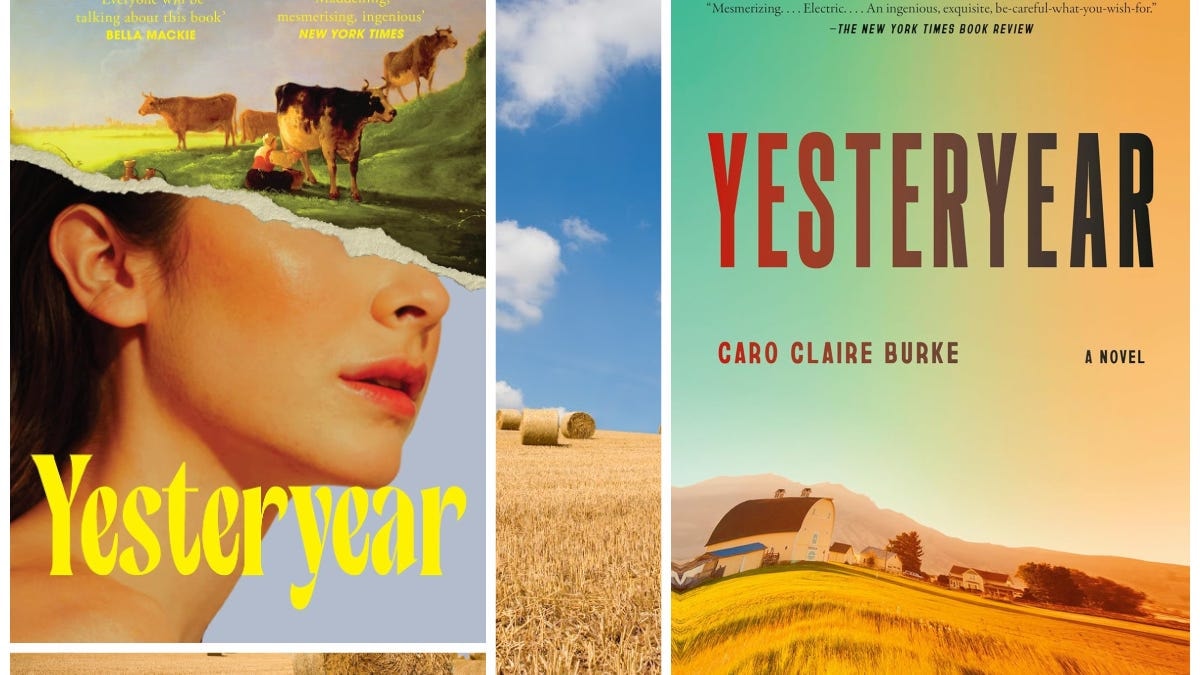
·I argued with Yesteryear for most of its length, and I mean that as a compliment. Caro Claire Burke's debut presents itself as a novel about tradwife culture, social media, and our fascination with a supposedly simpler way of life, but the question underneath is more interesting: why does the past look so good online, and why do so many of us want what Natalie is selling?
What she is selling is easy to describe: home-cooked meals, children running outside, handmade things, fewer screens, a slower pace, and a husband and wife devoted to family life. It is a lovely picture. It also confuses simplicity with deprivation, and I happen to know the difference.
I spent my childhood summers in a Russian village with no running water. We carried water from a well, washed laundry by hand in ice-cold water, bathed in the lake, and used an outhouse. A food truck came every so often, so we ate what people grew, preserved, gathered, or could get nearby. We picked berries and mushrooms. There were chores, and then there were more chores. I loved those summers: the woods, the lake, the freedom, and days that seemed enormous.
I also went to the doctor. Everyone did. We used modern medicine, we wanted good soap, we went into town, and not one person in that village sat around wishing life were harder for the sake of authenticity. There is a difference between choosing pieces of a slower life and making a virtue of hardship, and Yesteryear lives on that line.
Natalie understands something about the internet that a lot of people still miss: audiences don't only buy products, they buy lives. Once a kitchen has been photographed, narrated, edited, and posted enough times, it is no longer a kitchen. It is a set. The same goes for a marriage and for motherhood. The audience moves in, and before long it believes it knows the people who live there.
It doesn't. We watch someone's children grow up, sit at the family breakfast, learn the layout of the kitchen, and follow the pregnancies, vacations, arguments, renovations, disappointments, and celebrations, and somewhere along the way we mistake access for knowledge. We know the version we were shown. That does not stop us from ruling on whether the marriage is happy, whether the husband is controlling, whether she is a good mother, whether the children are happy, and whether any of it is authentic, and then defending our verdicts to complete strangers.
Burke is sharp here, because the book is as much about the audience as the performer. Why are we watching? What need is being met when we watch a woman bake bread, raise children, arrange flowers, cook elaborate meals, and appear to live outside the exhausting pace of modern life? My guess is that modern life asks women to be everything at once: successful but not intimidating, beautiful but effortless, ambitious but available, devoted mothers who stay interesting outside motherhood, independent but deeply partnered, productive and somehow serene. Watching someone walk away from part of that deal feels like relief.
The book also asks what happens when the family itself becomes content, and here I stopped being amused. A child cannot understand what it means to have thousands or millions of strangers watching his childhood, and a child who appears regularly online stops being only a member of the family and becomes part of the production. We have already seen very public cases of what happens when motherhood, authority, family dynamics, and an online audience get tangled together. The internet rewards intimacy, which means there is always pressure to show a little more. Not every parent who posts family life is exploiting their children, but the incentives deserve a hard look.
Nobody in Yesteryear is easy to defend, and I count that among its virtues. Readers often say they need a likable character. I don't. Give me an interesting one. Real people are selfish and generous, perceptive and delusional, kind at breakfast and cruel by dinner, and Natalie is all of it. She is exploited and manipulative. She wants the life she sells and knows how well it sells. She criticizes performance while performing a new identity. Deciding whether she is a victim or a fraud misses the point; she is both, which is what makes her feel real.
My complaint is with the ending, where the novel seems determined to drive traditionalism to its darkest possible conclusion. Natalie and Caleb can barely tolerate each other at times, yet they stay together, have more children, and embrace increasingly harsh conditions. I understand what Burke is doing, but I wanted more room for the uncomfortable middle, and I kept asking why Natalie couldn't want both: family and independence, marriage without erasing herself, children and work, and traditional rituals without the whole ideology attached.
Burke also brushes against the manosphere, the corner of the internet that sells men the other half of Natalie's fantasy, and I wish she had stayed there longer. The tradwife feed has a male mirror, and the men who star in it are selling a script of their own: be the provider, be in charge, and a grateful, obedient wife will be your reward. For an adult woman choosing a life, that fantasy is one thing. For a thirteen-year-old boy scrolling alone in his bedroom, it is an education. A generation of young men is growing up with these ideas presented as virtues, and the novel never asks what happens when those boys go looking for the woman they were promised and meet a real one instead, with her own work, her own opinions, and no interest in the role. That is where the fantasy stops being a lifestyle choice and turns into resentment, and it is the bigger story sitting outside the frame of this book.
Modern womanhood keeps getting sorted into opposing camps: career woman or traditional wife, independent or dependent, feminist or homemaker, modern or old-fashioned. Most women I know live in none of them. We borrow from all of them and build lives out of contradictions. So I am not convinced Natalie's transformation is freedom. She starts the book performing a life for the internet and may end it performing an ideology.
That leaves the question the book cares about most: how do you know a choice is yours? How do you know a belief is something you reached on your own and not something you absorbed from an audience, a community, a partner, an algorithm, or a reaction against the life you had before? Burke doesn't answer, and I'm glad. A novel doesn't owe us a conclusion. Sometimes the best thing it can do is start an argument.
This one started several, about women, marriage, motherhood, work, social media, consumption, performance, nostalgia, control, and how quickly we write stories about people we have never met. It also sent me back to that village and to the difference between remembering a simpler life fondly and pretending the past was better. It wasn't. The present isn't better across the board either, and that tension interests me more than picking a side.
Ambitious, messy, provocative, and an impressive debut. I disagreed with parts of it, questioned others, and couldn't stop thinking about it afterward, which is usually how I know a book was worth my time. 4/5 stars.
Culture