
Culture
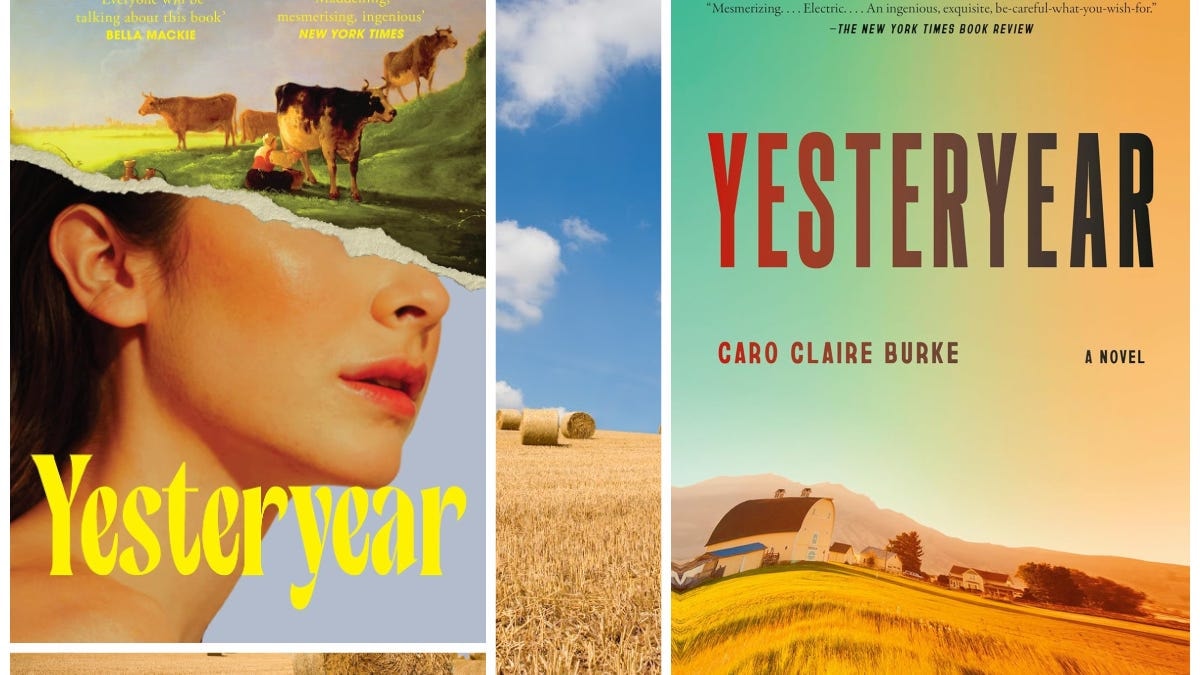
Book ReviewYesteryear: Why do we turn to the past?
By Vika
·I argued with Yesteryear for most of its length, and I mean that as a compliment. Caro Claire Burke's debut presents itself as a novel about tradwife culture, social media, and our fascination with a supposedly simpler way of life, but the question underneath is more interesting: why does the past look so good online, and why do so many of us want what Natalie is selling?
What she is selling is easy to describe: home-cooked meals, children running outside, handmade things, fewer screens, a slower pace, and a husband and wife devoted to family life. It is a lovely picture. It also confuses simplicity with deprivation, and I happen to know the difference.
I spent my childhood summers in a Russian village with no running water. We carried water from a well, washed laundry by hand in ice-cold water, bathed in the lake, and used an outhouse. A food truck came every so often, so we ate what people grew, preserved, gathered, or could get nearby. We picked berries and mushrooms. There were chores, and then there were more chores. I loved those summers: the woods, the lake, the freedom, and days that seemed enormous.
I also went to the doctor. Everyone did. We used modern medicine, we wanted good soap, we went into town, and not one person in that village sat around wishing life were harder for the sake of authenticity. There is a difference between choosing pieces of a slower life and making a virtue of hardship, and Yesteryear lives on that line.
Natalie understands something about the internet that a lot of people still miss: audiences don't only buy products, they buy lives. Once a kitchen has been photographed, narrated, edited, and posted enough times, it is no longer a kitchen. It is a set. The same goes for a marriage and for motherhood. The audience moves in, and before long it believes it knows the people who live there.
It doesn't. We watch someone's children grow up, sit at the family breakfast, learn the layout of the kitchen, and follow the pregnancies, vacations, arguments, renovations, disappointments, and celebrations, and somewhere along the way we mistake access for knowledge. We know the version we were shown. That does not stop us from ruling on whether the marriage is happy, whether the husband is controlling, whether she is a good mother, whether the children are happy, and whether any of it is authentic, and then defending our verdicts to complete strangers.
Burke is sharp here, because the book is as much about the audience as the performer. Why are we watching? What need is being met when we watch a woman bake bread, raise children, arrange flowers, cook elaborate meals, and appear to live outside the exhausting pace of modern life? My guess is that modern life asks women to be everything at once: successful but not intimidating, beautiful but effortless, ambitious but available, devoted mothers who stay interesting outside motherhood, independent but deeply partnered, productive and somehow serene. Watching someone walk away from part of that deal feels like relief.
The book also asks what happens when the family itself becomes content, and here I stopped being amused. A child cannot understand what it means to have thousands or millions of strangers watching his childhood, and a child who appears regularly online stops being only a member of the family and becomes part of the production. We have already seen very public cases of what happens when motherhood, authority, family dynamics, and an online audience get tangled together. The internet rewards intimacy, which means there is always pressure to show a little more. Not every parent who posts family life is exploiting their children, but the incentives deserve a hard look.
Nobody in Yesteryear is easy to defend, and I count that among its virtues. Readers often say they need a likable character. I don't. Give me an interesting one. Real people are selfish and generous, perceptive and delusional, kind at breakfast and cruel by dinner, and Natalie is all of it. She is exploited and manipulative. She wants the life she sells and knows how well it sells. She criticizes performance while performing a new identity. Deciding whether she is a victim or a fraud misses the point; she is both, which is what makes her feel real.
My complaint is with the ending, where the novel seems determined to drive traditionalism to its darkest possible conclusion. Natalie and Caleb can barely tolerate each other at times, yet they stay together, have more children, and embrace increasingly harsh conditions. I understand what Burke is doing, but I wanted more room for the uncomfortable middle, and I kept asking why Natalie couldn't want both: family and independence, marriage without erasing herself, children and work, and traditional rituals without the whole ideology attached.
Burke also brushes against the manosphere, the corner of the internet that sells men the other half of Natalie's fantasy, and I wish she had stayed there longer. The tradwife feed has a male mirror, and the men who star in it are selling a script of their own: be the provider, be in charge, and a grateful, obedient wife will be your reward. For an adult woman choosing a life, that fantasy is one thing. For a thirteen-year-old boy scrolling alone in his bedroom, it is an education. A generation of young men is growing up with these ideas presented as virtues, and the novel never asks what happens when those boys go looking for the woman they were promised and meet a real one instead, with her own work, her own opinions, and no interest in the role. That is where the fantasy stops being a lifestyle choice and turns into resentment, and it is the bigger story sitting outside the frame of this book.
Modern womanhood keeps getting sorted into opposing camps: career woman or traditional wife, independent or dependent, feminist or homemaker, modern or old-fashioned. Most women I know live in none of them. We borrow from all of them and build lives out of contradictions. So I am not convinced Natalie's transformation is freedom. She starts the book performing a life for the internet and may end it performing an ideology.
That leaves the question the book cares about most: how do you know a choice is yours? How do you know a belief is something you reached on your own and not something you absorbed from an audience, a community, a partner, an algorithm, or a reaction against the life you had before? Burke doesn't answer, and I'm glad. A novel doesn't owe us a conclusion. Sometimes the best thing it can do is start an argument.
This one started several, about women, marriage, motherhood, work, social media, consumption, performance, nostalgia, control, and how quickly we write stories about people we have never met. It also sent me back to that village and to the difference between remembering a simpler life fondly and pretending the past was better. It wasn't. The present isn't better across the board either, and that tension interests me more than picking a side.
Ambitious, messy, provocative, and an impressive debut. I disagreed with parts of it, questioned others, and couldn't stop thinking about it afterward, which is usually how I know a book was worth my time. 4/5 stars.
Culture
Reflections
Finding Authenticity: What It Means to Be Yourself as You Change
By Vika
·"Be authentic. Be yourself." It is one of the most common pieces of advice women receive, and I have come to think it is also one of the most misunderstood. It sounds wonderful. It fits nicely on a coffee mug. But what does it mean?
When I was a girl in the Soviet Union, I fell in love with Texas. Not the real Texas, which I had never seen, but the one in Mayne Reid's The Headless Horseman: vast landscapes, danger, adventure, freedom, and, most important to my teenage imagination, cowboys. I spent countless hours imagining myself there. Then, when I was sixteen, my parents announced that we were leaving the Soviet Union and moving to Houston. Houston, Texas. Talk about manifesting.
I did not speak English and did not know a single person in Texas, and none of that seemed to matter. I was moving to the place I had been dreaming about. Reality had other plans. It took four months of refugee travel through Austria and Italy before we reached Houston, and the Texas waiting for me bore remarkably little resemblance to the one Mayne Reid had promised.
I had come from Leningrad, now St. Petersburg, a beautiful, compact European city where people walked and took public transportation. Houston was enormous and diverse, and I learned quickly that living there without a car required a certain level of determination. I rode public transportation that first year. It did not figure prominently in my cowboy fantasy.
The adjustment was hard. The language, the culture, the people, and the expectations were all unfamiliar. But slowly I learned English, got a car, and started college, and then something happened: America became exciting. My life seemed to overflow with possibility. I wanted to learn everything, meet everyone, and go everywhere. If you had met me my freshman year, you would have found a bright-eyed young woman eager to tell you how her family had left everything behind for the chance at freedom in a new world. I loved that girl, and sometimes I miss her.
More than thirty years later, after raising children and practicing law for decades, the woman in the mirror is considerably more complicated. She has learned diplomacy, responsibility, and restraint. She knows when to speak and when silence is wiser, and she understands that being right and being effective are not always the same thing. Along the way she collected identities almost without noticing: mother, wife, attorney, advisor, athlete, friend. Each came with expectations, and at some point I began to wonder where, underneath all of them, I had gone.
Most women I know move among several identities every day. Family, work, friendships, and society all place expectations on us, and we learn which parts of ourselves are welcome in which rooms. Whether we admit it or not, we adjust. We soften an opinion, avoid a confrontation, smile when we are not particularly interested in smiling, and say the diplomatic thing instead of the thing passing through our minds. Does that make us inauthentic?
I used to think so. I believed authenticity required complete transparency, that being authentic meant expressing your inner self regardless of what anyone thought. I no longer believe that, and I am not convinced complete authenticity would make any of us pleasant to live with. Imagine practicing radical authenticity with your boss on a bad day, or with your spouse, or your children, or the person taking forever in front of you at airport security. Some thoughts deserve to remain authentic, private thoughts.
Part of the problem is that we treat authenticity as though each of us contains one permanent, pristine version of ourselves, and our job is to dig her out. I do not think she exists. The girl I was at sixteen was authentic. So was the young woman starting college in Houston, the new lawyer, the young mother, and the woman I am today. They are not the same person, and they should not be.
Identity keeps changing. We live, learn, and develop, and a friend once reminded me that although we live through constant change, we often forget to "allow the change" to take place within us. I think about that often. Every once in a while I reread things I wrote when I was younger, and I used to cringe. Did I write that? Apparently I did. Somewhere along the way I stopped being embarrassed by my younger self and began to love her. She was doing the best she could with what she knew at the time, the same as I am now.
Maybe that is what authenticity means to me today: accepting the person I used to be as fully as the person I have become. Finding authenticity does not mean preserving ourselves as we once were; growth would be impossible if it did. It means letting our experiences change us without losing the ability to recognize what matters to us underneath all that change.
Over time I have come to think authenticity has two sides. External authenticity is the self we show the world, shaped by our responsibilities, relationships, environment, and experiences. Internal authenticity is the quieter part of us that knows what we believe, what matters, and who we are becoming. I may choose to limit how much of a feeling I express in a given moment, but I work hard to keep that internal authenticity intact.
That may be the balance I have been looking for: to move through the world with kindness, mindfulness, and understanding without letting the world define me; to accept the girl I used to be without wishing to become her again; to accept the woman I am today without apologizing for how much she has changed; and to leave enough room for whoever comes next.
The girl in Leningrad reading The Headless Horseman could never have imagined the life waiting for her. She dreamed about Texas and cowboys, and somehow she found her way there. Maybe authenticity works the same way. We never completely arrive; we keep finding our way back to ourselves. So how do you know when you are being authentic? Maybe the better question is whether you still recognize yourself as you change.
Reflections
Reflections
Thinking Wednesday: The Art of Reflection
By Vika
·Everything is new this morning. It was new yesterday, and it will be new again tomorrow. A favorite designer releases a fresh collection. A restaurant opens on Tuesday and has a line around the block by Friday. A trend is born on someone's feed at breakfast and declared over by dinner. There are lists of the ten places one must go, the five pieces one must own, and the one book everyone is reading this week. The feed refreshes with a flick of the thumb, and there it all is again, bright and endless, like a shop window that changes its display every hour.
How easy it is, in such a current, to become a hunter. One moves from find to find with the appetite still sharp and the last one already fading. The eye grows quick and restless. It learns to skim, to tap, and to save for later, and later arrives full of new things that were also saved for later. One gathers and gathers, until the gathering becomes the whole of it.
The finding is the smaller part. The larger part comes after, in the stillness, when one sits with a thing long enough to know it. A ring reveals itself over a season, warming to the skin and catching the light on the tenth wearing more than the first. A café reveals itself on the third visit, when the woman at the counter remembers one's order and the afternoon light lands on the same table as before. A book reveals itself days after the last page, on a walk, in a sentence that returns of its own accord and rearranges something.
This is the work of reflection, and it is work of the best kind. It means thinking and weighing. It means asking what a thing means, what it adds, and what it asks of us. It means looking with a clear eye and an honest heart, and then deciding, with one's whole self, whether it stays. Reflection turns an object into a possession and a place into a memory. It turns a trend into a choice, or lets it pass lightly on its way to someone else.
I treasure these pauses. A cup of coffee drunk slowly with the phone face down on the table. A walk at the end of the day with only the evening in one's ears. An hour in the chair by the window with a notebook and a thought worth following. These are the moments in which I know what I think. They are also the moments in which I know what I want, and what I already have.
That is the find behind every find: the moment one stops long enough to see it. Vika's Finds lives there, in the pause between the discovery and the decision, where a thing is weighed, chosen, and kept. Thinking Wednesday is where I take that pause each week, in the middle of the week, with a question worth sitting with. The next new thing will arrive tomorrow, as it always does. Today belongs to what is already here.
Join me every Wednesday on Instagram at @vikasfinds for a new Thinking Wednesday topic. Bring your coffee and your thoughts. I'd love to hear where they take you.
Reflections
Reflections
Vika's Finds: On Finding the Right Thing, and the Right Place
By Vika
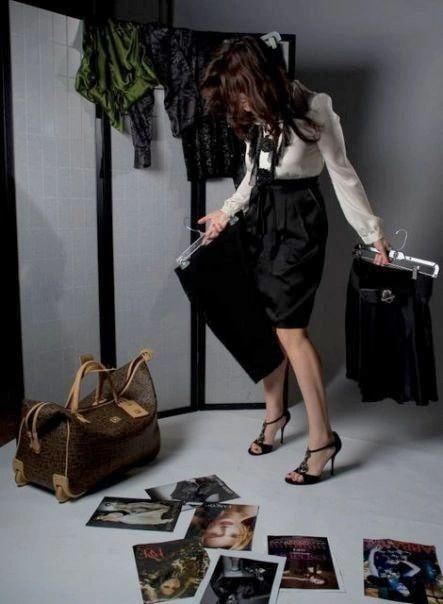
·How clarifying it is, standing before a rack of clothes, the hangers knocking softly together as one draws them aside, one after another, silk and wool and linen passing under the hand like the pages of a book one has read before and half remembers, to discover that rightness matters more than plenty; that somewhere among a great many things there waits the thing. Here is a blouse, beautiful, certainly, and made for looking at; here a jacket that was the fashion once (last spring? the spring before?) and belonged, all along, to someone else; here a dress that looked so well in the shop, in that light, on that afternoon, and has hung ever since like a promise saved for another day. And then, among them all, suddenly, the piece that makes sense at once, which the hand reaches for before the mind has finished deciding; the one that works.
That is what style is: an eye trained to know that feeling, while fashion runs ahead to wherever it goes. The right thing announces itself; it has color, shape, and nerve, whatever it cost, whenever it was made, whoever else wears it this season, and it turns heads because it is entirely one's own. It walks into one's life as though it had always lived there, making the morning easier and one bolder, composed, unmistakably oneself; it has earned its place.
This is part of what Vika's Finds has become for me: a gathering of lovely objects, yes, and beyond that a practice of noticing what is worth the finding. A great coat; a dress that moves as one moves; shoes one will wear again and again; a handbag at once practical and polished; things that photograph well and live well, which is another matter altogether. I am drawn now to clothes that hold up under the weight of ordinary days and outlast the moment that brought them; to things with shape and texture and presence; to things that have been thought about.
Sorting through clothes is a kind of editing, and editing is a kind of knowing. One sees, gradually, what one returns to, and returns to again; one begins to feel the difference (and it is a difference; it matters) between what is merely nice and what is right. The right piece quiets the noise. One feels settled with it at once, persuaded, at peace; it belongs, as a word belongs in a sentence, as a certain person belongs at a certain table.
It is the same with the self one shows the world, this thing people now call a personal brand. It reaches further than getting the job or winning the client, further than looking well or standing apart from the competition. It is the embracing of whatever makes one unique; the finding of a purpose and the living of it, day upon day; the patient cultivation of the best version of oneself. It asks, as the closet asks, for honesty. One must acknowledge one's strengths, and one's weaknesses too, dig down to wherever the truth lies, be brutally honest there, and then, having found it, put it to use toward one's own version of success in every room of one's life. Some things one has held on to belonged to an earlier self. Some fit once and have served their purpose. And some, seen clearly at last, are the things one reaches for again and again.
And beneath it all, holding it together the way a good seam holds a coat, is integrity. To be a good person; to do the right thing when the right thing is hard, when the room is waiting for a different answer and the easier word is already on one's lips; to choose the thing, or the place, for its true worth, and let the cheaper one, the more convenient one, the one that would please someone else for an afternoon, pass by. It is a quiet choice, made again each morning, and it asks something of us; yet one comes to know it as one knows the right coat, by the way it sits, by the way one stands a little straighter in it. The right path is the one that belongs to oneself, chosen with open eyes, walked with a steady step, and returned to, again and again, as one returns to everything worth keeping.
That is what good style is, in the end, and a good personal brand too: a sharper eye for what is worth keeping, and wearing, and coming back to. And the eye, once trained, goes out with one past the closet door, into the street, into the evening; it knows, before the menu is opened, the restaurant where the light falls kindly on the tablecloth and the evening takes its time; the café where the cup is warm and the chair by the window has been waiting; the bar at that hour when the voices soften and the glasses catch the lamps; the hotel room where one sets down the suitcase, draws back the curtain, and feels, absurdly, at home. Such places belong, as the coat belongs, as the word belongs in its sentence.
That is what Vika's Finds is about: the right thing, the right place, the right choice. And that is the real find.
Reflections

Style
Fashion and Identity: What Two Generations of Women Taught Me About Personal Style
By Vika
·As a child, I loved watching my mother get ready for work. Getting dressed was never a chore for her. She did not own many clothes, yet she always looked striking and elegant in feminine dresses and high heels that accentuated her long legs. She framed her almond eyes with jet black eyeliner, colored her lips an impeccable crimson, and finished the look with diamond or cameo earrings. Her clothes were never flamboyant, because her height and beautiful white hair drew enough attention on their own. Her style was also, unmistakably, the style of a St. Petersburg native.
Like my mother, I have always chosen what to wear with intention. When I first came to Houston, I owned half a suitcase of clothes, and I already knew that fashion is one of the most visible markers of separation in society. There is runway fashion and there is more affordable ready-to-wear, but there is never cheap fashion.
When I started practicing law, I could afford two fashionable, understated suits, and they taught me how to accessorize. Now that I have had time to collect many beautiful outfits, I express myself through what I wear with zeal, and I make my own jewelry.
For women who love fashion, the way we dress is bound up with who we are. Personal style is a visual declaration of our individuality, to ourselves and to everyone around us. Yet, as I wrote in my post on authenticity, we form our identities through our interactions with other people.
Our appearance is central to how others evaluate us. As women, we play many roles in society: mother, daughter, wife, professional, and more. Each role shapes what we choose to wear and limits our self-expression by what we expect others to think. Those roles can reinforce our identity, disregard it, or, as we like to say in Texas, shut it down.
Our fashion choices carry psychological, social, and economic consequences. The right outfit can win us a job, a date, or a promotion, and the wrong one can cost us any of them. So while most women enjoy looking through fashion magazines, some are afraid to express themselves freely and dress the way others think they should. Other women consider fashion itself a passing trend, ignore social pressure altogether, and wear whatever feels good to them.
My grandmother was one of those non-conformists. She refused to wear anything uncomfortable or anything not made of durable natural materials. My mother called her a "tasteless woman," and growing up, I believed her, because my mother was my idol. Today I see my grandmother as a rebel who stayed true to her values: simplicity, practicality, and minimalism.
She was raised in a house filled with art, music, sculpture, and impeccable taste, but as soon as she became an adult, World War II cut short her own fashion metamorphosis. Her home city of Leningrad was under siege for 872 days, and during that time she buried half of her family and survived without food. The experience taught her how to go without, and the tragedy of war marked her identity forever. Yet she held on to her prewar memories. She never embraced the new, more affordable synthetic fabrics and kept sewing her own clothes from natural fibers. She made her own jewelry, too. And she taught me what my stylish mother could not: how to take photographs, sew, and embroider. Without those skills I would not be who I am today, and I most likely could not have created Vika Jewelry.
For those of us driven by self-expression, fashion is a powerful tool, but like any tool, it works only as well as we understand its function. The ways we can use fashion to express ourselves are as limitless as the questions it raises about identity.
What about you? Which kind of woman are you: fashion conscious, fashion forward, indifferent, or non-conformist? Tell me in the comments.
Style
Culture
Film ReviewThe Price of the Horse: Nolan's Odyssey and the Race We Keep Running
By Vika
·Christopher Nolan has been making variations on the same anxious movie for twenty-five years. His films believe in people and fear what people will do with the tools they build. His Batman pictures, taken together, form a course in how a city falls apart: a secret army sets out to cleanse Gotham by force, then the Joker arrives to burn money for the fun of it, then Bane hands the mob a revolution and a mask to hide behind. Inception turned a crew of con men into heroes for slipping into a sleeping man's head and planting an idea he would swear was his own. Interstellar grieved for a human race that had quit dreaming big. Tenet and Oppenheimer looked straight at the machinery of self-destruction. Anyone who has gone to the movies since 2000 has been living in Nolan's world.
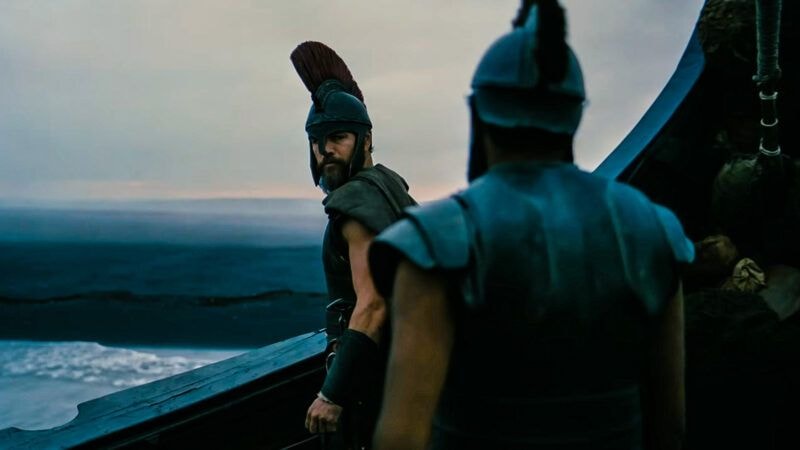
Now he has returned to the oldest road trip in Western literature. Christopher Nolan's The Odyssey opened on July 17 with Matt Damon as Odysseus, and anyone who read Homer in school will recognize the stops along the way. The whirlpool is here, and it is terrifying. So is the cyclops in his cave. And so is the Trojan Horse, the trick that won the war and cost its inventor ten years of trying to get home.
The horse is where Nolan shows his hand. He leaves it beached on the sand where the Greek camp used to be, looking less like a trap than a trophy, as if the Greeks finally broke and sailed away. The Trojans drag it inside. Then the soldiers climb out, and what follows plays less like a victory than a massacre.
Nolan has staged this con before. Inception is a Trojan Horse movie in a nice suit, a heist that depends on the target accepting the intruder as a gift, and audiences cheered the thieves when they pulled it off. The Odyssey asks what becomes of the thief afterward. Odysseus joins a family of Nolan heroes who lose time trying to get back to the people they love: Dom Cobb aching to see his children in Inception, Cooper in Interstellar watching his kids grow up on a video screen. Cobb spins a top to find out whether he has made it home. Odysseus makes it home and finds a harder question waiting for him there.
Homer ends his poem with a win. Odysseus kills the suitors and takes back his throne. Nolan ends his film with guilt, circling back to Troy's last night and presenting the famous trick as mass killing dressed up as tactics. Still disguised as a beggar, Odysseus talks to Penelope through a screen door and admits that winning the war meant killing innocents. Damon plays it without self-pity. Athena is rethought as well. The woman guiding him turns out to be a projection of the goddess, which leaves open the possibility that the voice he credited to heaven was his conscience all along.
Some classicists object to these changes. Others point out that the seed is already in Homer. In the poem, when a blind singer performs the story of the horse at a banquet, Odysseus hides his face and weeps, unable to hear his own cleverness praised. Nolan takes those tears seriously and builds a movie around them.
At its center, the film is about trust. In the ancient world, welcoming a stranger was sacred law, and Nolan connects the horse to a betrayal of that duty, so the most famous trick in literature becomes the thing Odysseus cannot forgive himself for. Characters speak throughout of the Sea Peoples, raiders who ignore Zeus's law, and near the end Odysseus tells Penelope the truth: the Greeks became those raiders. The film suggests that a society which admires the con man will struggle to remain a society.
The resemblance to Oppenheimer is hard to miss. One critic describes the film as the story of a brilliant man whose invention ends a long war, wins him applause, and leaves him haunted, before revealing he means Odysseus. SlashFilm reads Dunkirk, Oppenheimer, and The Odyssey as a loose trilogy: the first celebrates violence, the second questions the science behind it, and the third deals with the guilt of having used it.
The pattern the film traces is older than any of these movies. Rome conquered to protect its borders and kept conquering. The great powers of 1914 raced to build battleships and draw up mobilization plans, and the plans carried them into catastrophe. The Second World War ended with a race to split the atom. The Cold War stacked warheads by the thousands on the theory that the other side might stack more. Each generation builds its own horse and tells itself the same thing: we have to win, and we have to win first.
Today the horse is the AI race. Countries and companies compete to build ever more capable artificial intelligence, and the argument for speed is that slowing down hands the advantage to someone else. The film takes no side in that debate. It poses the question every competitor faces before the starting gun: what are you willing to break to get there first?
The Odyssey offers no answer, and a movie is not obliged to supply one. It gives us Odysseus, home at last, carrying Troy on his back. It proposes that a victory is measured by whether one can live with it afterward, and whether the whole story could be told at one's own kitchen table without a screen door in the way. That is a great deal to ask of a summer blockbuster, and Nolan asks it with remarkable craft.
The Odyssey (2026): 5/5 stars.
Have you seen it? Tell me where it left you in the comments, and follow @vikasfinds on Instagram for a new Thinking Wednesday topic every week.
Culture

Reflections
Finding St. Petersburg
By Vika
·I was born in St. Petersburg, and I grew up breathing its damp air along with its legends. The city always seemed larger than ordinary life. It was Pushkin and Dostoevsky, white nights and gray winters, palaces doubled in the canals, courtyards tucked behind heavy doors, and long walks down streets that held more history than any child could absorb.
Growing up in a place like that, you take it for granted. It is home. You grumble about the weather, you know which buses to catch and which streets flood, and you hurry past buildings that tourists cross oceans to see. Nobody pauses each morning to admire the Hermitage or contemplate the Neva. You are trying to make it to school on time.
Still, the city seeps in. For years after I left, I carried St. Petersburg without noticing: the books I read there, the language, the humor, a love of beauty laced with melancholy, and, I admit, a certain flair for drama. I kept the habit of walking a city rather than passing through it. I kept the conviction that a building can have a personality and that history lives under your feet.
Russians have a word for it: peterburzhets, a Petersburger. It describes a temperament more than an address. A Petersburger is expected to be educated, cultured, a touch ironic, a little reserved, and devoted to literature, theater, museums, conversation, and the aesthetics of daily life. Like most portraits of a city, it is part truth and part mythology, and the proportions hardly matter.
I never thought of myself that way. I was a girl living in Leningrad, as the city was called then. My summers belonged to a Russian village that looked nothing like the elegant city of postcards. We hauled water, washed clothes by hand, bathed in the lake, used an outhouse, foraged in the woods, did our chores, and waited for a food truck that came only now and then. Both places shaped my childhood, the grandeur and the simplicity side by side, and that contrast taught me early that beauty and hardship can share a single life.
I left the Soviet Union at sixteen. At that age, leaving feels less like philosophy than motion. You pack what fits, you say goodbye, and you move forward because everyone around you is moving forward. Only much later did I understand what it means to leave a city before you have finished becoming yourself.
My family settled in Houston, a place so unlike St. Petersburg that the contrast sounds invented. I traded a compact European city of canals, public transit, stone facades, and long winters for a sprawling American one built on highways, cars, heat, and possibility. I learned English, went to college, became a lawyer, and built a life. Along the way, St. Petersburg shifted from a place I lived to a place I remembered.
Memory is a poor archivist, especially with nostalgia at the desk. We preserve certain streets and rooms in perfect detail and let others vanish. We keep the smell of rain on stone, footsteps echoing down an apartment hallway, the light in June. We edit without noticing the scissors.
So going back after many years felt strange. I knew the city, and I didn't. Some corners were exactly as I remembered. Others had transformed: buildings restored, shops sprouting where something else once stood, restaurants polished to a shine, and streets that loomed enormous in childhood shrunk to human size. And then, without warning, a courtyard, a staircase, the light on the Neva, or the particular gray the sky turns before rain would fold time in half. Those moments hit me almost physically.
What surprised me most was discovering how much of St. Petersburg I had smuggled into an entirely different life. It explains why I notice architecture wherever I travel, why I walk neighborhoods instead of ticking off attractions, and why I love old hotels, bookstores, cafés, museums, and places where history still shows its patina.
It explains my attachment to Russian literature, too. I grew up on Tolstoy, Chekhov, Dostoevsky, Pushkin, Gogol, Pasternak, and Turgenev, and later Nabokov and Bulgakov. They were never abstract cultural references to me. They belonged to the same world as the streets outside my window.
St. Petersburg teaches early that a place can hold many versions of itself: imperial capital, revolutionary city, Leningrad, and St. Petersburg once more, with grandeur and suffering, beauty and severity, memory and reinvention all layered together. People work the same way. We keep becoming new versions of ourselves while the old ones travel along inside us.
I am no longer the girl who left Leningrad at sixteen. I have lived most of my life elsewhere, with different habits, a different rhythm, and even a different everyday language. Yet when I return, some part of me recognizes the city before my mind catches up. That is what home becomes when you leave it young: less the place you belong now than the place that explains who you became. I went back looking for the city I remembered, and I found part of myself instead.
Reflections